

Tech Comparisons: Web App vs Website — Which One Does Your Business Need?
A notepad with the word "WEB" on it, surrounded by wooden blocks with computer key commands, illustrating a visual representation of Tech Comparisons related to web technology.

The Most Important Tech Comparison Your Business Will Make

This is a definitive tech comparison for the modern business leader. In today’s digital-first world, your online presence is the bedrock of your enterprise. But when it comes to building that presence, a critical and often misunderstood choice emerges: do you need a website or a web application? This isn’t just a matter of semantics; it’s a strategic decision with profound implications for your budget, your customer experience, your operational efficiency, and your company’s future growth. Making the wrong choice is like buying the wrong tool for a critical job—it leads to wasted time, frustrated teams, and missed opportunities.

To truly understand this tech comparison, we need a powerful analogy. Think of it like choosing a computing device.

A website is like a standard, off-the-shelf consumer phone. It could be a Samsung phone, a Google Pixel phone, a OnePlus phone, or a Motorola Moto G. These devices are brilliant at what they do: displaying information beautifully. You can browse a web page, read articles, and look at photos on their stunning display panels. The user experience is generally straightforward. You pick a device like a Samsung, and it works right out of the box for its intended purpose. Many businesses start here, with a digital presence that, like a brand new Samsung phone, is designed to inform and present.

A web application, on the other hand, is like a piece of custom-built, high-performance enterprise hardware. It’s not a simple consumer phone. Imagine a powerful server rack packed with multiple Intel processors, a specialized industrial tablet with a ruggedized glass screen, or a sophisticated diagnostic tool. This type of device isn’t just for displaying information; it’s built to perform a process. It runs complex software, interacts with users, manipulates data, and integrates with other systems. It’s powered by a different class of technology, like an Intel chip instead of a standard mobile processor. It’s designed for heavy-duty performance and custom functionality.

At StraStan Solutions Corp., we are expert architects of both. As a leading Philippine-based IT services and digital marketing firm, we guide our clients through this critical tech comparison. Our full-stack web application development services are not about just giving you a generic Samsung or Google Pixel equivalent; they are about understanding your business needs so deeply that we can determine whether you need an informational powerhouse or a workhorse application with the processing power of an Intel system.

This guide will walk you through every facet of this comparison. We will dissect the technology, explore the use cases, analyze the performance differences, and provide a clear framework to help you decide. We’ll look at the “display,” the “processor,” the “battery life,” and the “camera” of your digital presence to ensure you make the right investment. For the next few hours of your reading time, we will explore this topic in depth, covering every type of consideration.

 A person browsing DIY craft videos on a laptop displaying "DIY FOCUS - DO IT BY YOURSELF," providing a clear visual for Tech Comparisons

The Website – Your Digital Brochure and Brand Ambassador

Let’s begin with the more familiar of the two: the website. A website, in its purest form, is a collection of interlinked web pages hosted on a single domain, accessible via a web browser. Its primary purpose is informational. It is a one-way communication channel, delivering content from your business to the user.

The “Consumer Phone” Analogy: A Tool for Consumption

To understand a website, let’s stick with our analogy of a consumer phone. Think about the most popular smartphones on the market, whether it’s a flagship Samsung phone, a camera-focused Google Pixel phone, a sleek OnePlus phone, or a budget-friendly Motorola Moto G or Tecno Pova. What is their primary function for most users, for most hours of the day? Consumption of information.

  • The Display: The first thing you notice on a new Samsung phone or Google Pixel phone is the beautiful display. It’s designed to showcase content brilliantly. The high resolution, the vibrant colors, the impressive brightness measured in nits—it’s all optimized so you can read text, view images, and watch videos. A website’s “display” is its visual design. Its job is to present your company’s information in the most attractive and readable way possible. The quality of the design, like the quality of the display on a premium phone, sets the first impression. A cheap phone might have a dim display with poor colors; a cheap website has a dated, unappealing design. A premium Samsung phone has a bright, crisp display with hundreds of nits of brightness; a premium website has a clean, modern design that is a pleasure to look at. The protective glass on the phone is like the clean code of the website—it makes the experience smooth and seamless.

  • The Camera: The camera system on a modern phone like the Google Pixel or a high-end Samsung is a marvel. It captures high-quality images to be displayed later. It’s an input device for content that will be consumed. A website’s “camera” is its ability to showcase your products and services through high-quality photography, videos, and graphics. It captures the essence of your business and presents it to the world. The quality of your website’s visual content is as important as the quality of the camera on a flagship phone. You wouldn’t use a blurry camera to take product shots, and you shouldn’t use poor-quality images on your website. Every phone from a Samsung to a Oneplus competes on the quality of its camera.

  • The Interaction: The interaction with a standard phone is mostly passive. You swipe, you tap, you read. You are consuming content that is presented to you. Similarly, interaction with a website is limited. Users can click on links to navigate from one page to another, read text, and view images. They might be able to play an embedded video. The flow of information is predominantly one-way. This is the defining characteristic of a static website.

Key Characteristics of a Website

  • Primary Purpose: To Inform. A website’s job is to tell visitors who you are, what you do, and why they should care. It’s a digital brochure, a portfolio, a news source, or a blog.

  • One-Way Communication: The user is a reader or a viewer. They are consuming the content you provide.

  • Static Content: While the content can be updated (e.g., publishing a new blog post), the functionality of the website itself does not change based on user input. Each visitor sees the same type of content.

  • Lower Complexity: The development process for a static website is generally less complex than for a web app. The focus is on front-end development (the visual design and layout—the “display”) rather than complex back-end logic (the “processor”).

  • Built for Readability: The entire design and structure are optimized for presenting information clearly. This is why a good website, like a good phone display, is judged on its clarity and ease of use.

When Does a Business Need a Website?

A website is the perfect solution for many businesses, especially when the primary goal is brand awareness, credibility, and marketing. Here are some common use cases:

  • Brochure/Marketing Site: This is the most common type of website. It’s for businesses that want to establish a professional online presence, showcase their products or services, provide contact information, and build brand credibility. Most corporate websites, law firm websites, and contractor websites fall into this category.

  • Portfolio Site: For creative professionals and agencies (photographers, designers, architects), a website is the ideal platform to visually showcase their work. The “display” and “camera” aspects are paramount here.

  • Blog or News Site: If your primary goal is to publish articles and build an audience through content marketing, a website is what you need. The focus is entirely on presenting readable content.

  • Informational Site: For non-profits, educational institutions, or government agencies, a website is a crucial tool for disseminating information to the public.

In all these cases, the core need is to push information out to an audience. The user does not need to perform complex tasks or manipulate data. They need a clear, fast, and professional “display” for your content. For these needs, a well-built website, like a top-tier Samsung phone or Google Pixel phone, is the perfect device for the job. The development process is focused on creating the best possible viewing experience.
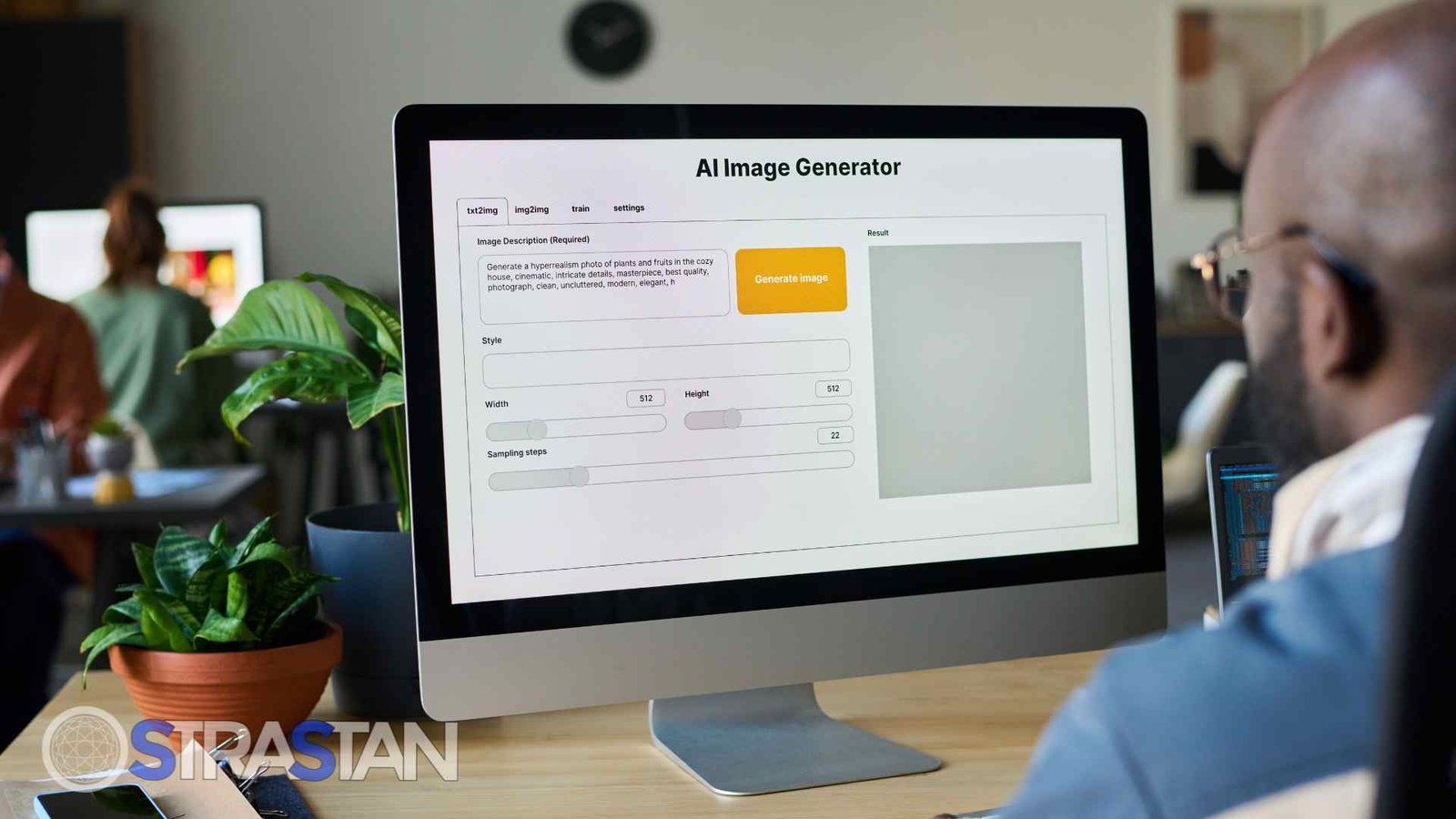
A person using a desktop computer showing an "AI Image Generator" interface, highlighting the advanced functionalities often found in web applications, suitable for Tech Comparisons.

The Web App – Your Interactive Business Tool

Now, let’s shift our tech comparison to the other side of the coin: the web application, or “web app.” If a website is for consumption, a web app is for interaction. A web app is a piece of software that runs in your web browser. It’s designed to perform specific tasks, manipulate data, and provide a rich, interactive experience for the user.

The “Custom Enterprise Device” Analogy: A Tool for Production

Let’s evolve our analogy. A web app is not a simple consumer phone. It’s a powerful, custom-built piece of enterprise hardware. This isn’t a Samsung or a OnePlus you buy off the shelf. This is a specialized device engineered for a specific, demanding process.

  • The Processor (The “Intel” Core): The heart of a high-performance enterprise device is its processor. We’re not talking about a standard mobile chip like a Qualcomm Snapdragon; we’re talking about the raw power of an Intel Xeon or an Intel Core i9 processor. This is a chip with multiple cores, designed to handle millions of calculations per second, run complex software, and manage multiple processes simultaneously. The back-end of a web app is its Intel processor. It’s the server-side logic that performs the heavy lifting: querying databases, processing user inputs, running business rules, and integrating with other systems. The performance of a web app is directly tied to the quality and efficiency of its “Intel” core—the back-end code. A simple website might not need much processing power, but a complex web app needs a powerful Intel engine to run smoothly. The number of cores in the processor is analogous to the app’s ability to handle concurrent users and processes. A web app with a powerful Intel architecture can handle thousands of users for hours on end without slowing down. This is the type of performance StraStan builds. We design the Intel architecture of your application for peak performance. The choice of an Intel processor over another type of chip is a critical decision in computer engineering, just as the choice of back-end technology is in web app development. A powerful Intel chip can make all the difference in performance. We conduct many tests to ensure the Intel component of your app is optimized.

  • The Battery Life: A critical feature of any portable device, from a phone to a laptop, is its battery. A powerful device with a poor battery is useless. In our analogy, “battery” represents the efficiency and resource management of the web app. A poorly built web app is like a device that drains its battery in just a few hours. It consumes excessive server resources (CPU, memory), leading to high hosting costs and slow performance under load. A professionally architected web app, like one built by StraStan, is engineered for efficiency. Our code is optimized to perform its tasks using the minimum necessary resources, ensuring a long and stable “battery” life. This means the application can run for more hours, serve more users, and cost less to operate. A good battery is essential for a good user experience.

  • The Software and Functionality: A consumer phone like a Samsung or Google Pixel comes with a standard operating system (like Android) and a pre-installed set of apps. A custom enterprise device runs specialized, proprietary software designed for a specific task. A web app is that specialized software. It’s not just displaying a static page; it’s providing functionality. It’s Gmail, it’s Google Docs, it’s Facebook, it’s your online banking portal, it’s a project management tool. Each one is designed to help the user do something. The value of the device is in the software it runs.

Key Characteristics of a Web App

  • Primary Purpose: To Interact and Perform Tasks. A web app is a tool. Users come to a web app to accomplish a goal: to send an email, to create a document, to book a flight, to manage a project, to buy products.

  • Two-Way Communication: The user is an active participant. They input data, manipulate information on the screen, and the application responds and changes based on their actions. The information flows both ways.

  • Dynamic Content: The content displayed in a web app is dynamic and personalized. What you see in your Gmail inbox is completely different from what someone else sees. What you see on your e-commerce account page is specific to you.

  • Higher Complexity: The development process for a web app is significantly more complex. It requires robust back-end development (the Intel processor), database management, and often, integration with other systems via APIs. The front-end (“display”) is also more complex, as it needs to handle user input and dynamic data.

  • Built for Functionality: The entire design and architecture are optimized for a specific process. The success of a web app is measured by how easily and effectively a user can complete their task.

When Does a Business Need a Web App?

A web app is the right choice when your business needs to move beyond simply providing information and start providing functionality. If you need your digital presence to be an active part of your business operations, you need a web app.

Here are some common use cases:

  • E-commerce Platforms: Every online store is a web app. Users need to search for products, add them to a cart, create an account, and complete a purchase. This is a complex, interactive process. A simple Samsung e-commerce app is a good example of this type of web app.

  • Software as a Service (SaaS): These are products where the software itself is the business. Think of project management tools like Asana, accounting software like Xero, or CRMs like Salesforce. These are all powerful web apps.

  • Customer Portals: Many businesses build custom portals for their clients. A client might log in to track the status of their project, pay invoices, access support, or manage their account settings. This type of web app enhances customer service and streamlines communication.

  • Internal Business Tools: As we’ve discussed, web apps are incredibly powerful for improving internal operations. This could be a custom CRM, an inventory management system, an HR portal, or a data analytics dashboard. These tools are built to solve a specific business process problem.

  • Online Marketplaces and Social Networks: Platforms like Facebook, Lazada, or Grab are all massive, complex web apps that facilitate interactions between millions of users.

In all these cases, the digital tool is not just a marketing asset; it is a core part of the business’s service delivery and operations. The investment is not just in a better “display” or “camera,” but in a powerful “Intel” processing engine that can handle a demanding workload for many hours. This is the type of complex development that requires a team of experts like StraStan.

The Head-to-Head Tech Comparison

Now that we have a clear understanding of the fundamental difference between a website and a web app, let’s put them head-to-head in a detailed tech comparison. This section will break down the key attributes side-by-side, using our device analogy to make the distinctions clear. This is essential for any business leader trying to decide where to invest their resources. This is a critical process.

Comparison 1: Purpose and User Interaction

  • Website (The “Samsung Phone”):

    • Purpose: To inform and present. It’s a marketing and communication tool. Its goal is to deliver a message to the user.

    • Interaction: Primarily one-way. The user navigates and consumes content. Interaction is limited to clicking links, watching videos, or perhaps filling out a very simple contact form. The experience is similar for all users. You pick up the Samsung phone and read what’s on the display. The quality of the display and the camera that captured the content are key.

  • Web App (The “Intel-Powered Device”):

    • Purpose: To enable tasks and provide functionality. It’s an operational tool. Its goal is to help the user accomplish a process.

    • Interaction: Highly interactive and two-way. The user inputs data, manipulates information, and the application responds dynamically. The experience is often personalized to the logged-in user. You use the device to run software, and the power of its Intel processor determines its performance. The interaction is the core value.

Comparison 2: Development Complexity and Process

  • Website:

    • Complexity: Generally lower. The development process is heavily focused on the front-end: HTML, CSS, and JavaScript to create the visual layout and design (the “display”). The back-end might just be a simple Content Management System (CMS) for updating text and images on a page.

    • Process: The design and content creation process is often the most time-consuming part. The technical build is more straightforward. The launch can be relatively quick.

  • Web App:

    • Complexity: Significantly higher. The development process requires a deep focus on both the front-end and the back-end.

      • Back-End (The “Intel” Engine): This is the most complex part. It involves choosing a programming language (like Python, Java, or Node.js), designing a database, building APIs, and writing the business logic that powers the application. The quality of this Intel-level architecture is critical for performance and scalability. This process can take many hours of development time.

      • Front-End (The “Interactive Display”): The front-end is also more complex, often using advanced JavaScript frameworks (like React, Angular, or Vue.js) to create a responsive, app-like experience in the browser. It needs to handle user input and display dynamic data efficiently.

    • Process: The development process is much more involved and requires a rigorous approach, like the agile methodology we use at StraStan. It involves extensive testing, database design, and security considerations from the start.

Comparison 3: Integration Capabilities

  • Website:

    • Integration: Typically has limited or no integration with other business systems. It operates as a standalone entity. You might embed a social media feed, but it doesn’t usually “talk” to your CRM or inventory software.

  • Web App:

    • Integration: Designed for integration. A core feature of most web apps is their ability to communicate with other software via APIs. A web app can pull customer data from your CRM, push sales data to your accounting software, and connect to third-party services like payment gateways or shipping providers. This integration capability is what allows a web app to automate and streamline your business process.

Comparison 4: Cost and Price Considerations

  • Website:

    • Cost: The initial development price is generally lower due to the lower complexity. The cost is primarily driven by the quality of the custom design and the amount of content.

    • Ongoing Price: Ongoing costs are usually limited to hosting, domain registration, and occasional content updates.

  • Web App:

    • Cost: The initial development price is significantly higher. The cost is driven by the complexity of the back-end logic (the “Intel” engine), the number of features, and the extent of third-party integrations. The hours of development required are much greater.

    • Ongoing Price: Ongoing costs are also higher. A web app requires more robust hosting to ensure performance, regular maintenance and updates to the codebase, and ongoing support. However, this higher price should be viewed in the context of the app’s ROI. A web app that automates a process and saves your company thousands of hours of manual work per year provides a value that far exceeds its cost.

Comparison 5: Authentication and Security

  • Website:

    • Authentication: Most websites do not require users to log in. They are publicly accessible to everyone.

    • Security: Security is important (e.g., having HTTPS), but the concerns are generally focused on protecting the website itself from being defaced or hacked.

  • Web App:

    • Authentication: Almost always requires user authentication (a login process). Users have accounts and access to their own private data.

    • Security: Security is paramount and much more complex. A web app handles sensitive user data, so the security process must be robust. This includes protecting against data breaches, ensuring user privacy, and managing different levels of user permissions. The “case” of the device must be incredibly strong and protect against dust and other threats.

Summary Table: A Quick Tech Comparison

Feature Website (The “Samsung Phone”) Web App (The “Intel Device”) Core Purpose To inform and display content To perform tasks and enable interaction User Interaction Passive consumption (reading, viewing) Active participation (creating, editing) Back-End Power Simple (CMS) Complex (Intel-level business logic) Content Static and public Dynamic and personalized Complexity Lower Higher (requires deep back-end process) Integration Limited or none Essential and extensive (via APIs) Authentication Not usually required Almost always required Development Focus Visual Design (the “Display” & “Camera”) Functionality (the “Intel” & “Battery”)

This head-to-head tech comparison should make the distinction clear. The choice is not about which one is “better” in a vacuum; it’s about which type of tool is right for your specific business goals.

The Decision-Making Process – What Does Your Business Truly Need?

Now that you understand the fundamental differences in this tech comparison, it’s time to turn the lens on your own business. Choosing between a website and a web app is a strategic decision that should be driven by a clear understanding of your goals, your users, and your operational processes.

This is where the StraStan Business Analysis process provides immense value. We guide our clients through a structured discovery process to ensure they invest in the right type of digital solution. Here are the key questions you need to ask yourself.

Question 1: What is the primary goal of your digital presence?

This is the most important question. Be specific. “To have a presence online” is not a goal.

  • Is your goal to build brand awareness and credibility? To showcase your work and provide contact information so potential customers can call your phone? If you are a law firm, a consultant, or a contractor, and your sales process happens offline, a high-quality, professional website is likely what you need. The focus should be on a stunning “display” and a professional “camera” to showcase your work.

  • Is your goal to automate a core business process? To allow customers to buy products, manage their accounts, or book appointments directly online? To give your internal team a tool to manage projects or inventory? If you need your digital platform to do something, you need a web app with a powerful “Intel” engine.

Question 2: How do your users need to interact with you online?

Think about your target audience. What do they expect to be able to do when they find you online?

  • Do they just need to find information? Are they looking for your phone number, your address, or information about your services? A website is sufficient.

  • Do they need to perform a task? Do they need to customize a product, track an order, collaborate on a document, or make a payment? This requires the interactive functionality of a web app. Your users expect their digital device, whether it’s a phone or a laptop, to be able to do these things.

Question 3: What is your data and content strategy?

  • Will the content be the same for every visitor? If you are publishing blog posts, news articles, or service descriptions, and this content is largely public and static, a website is the right fit.

  • Will the content be personalized and dynamic? Will users need to log in to see their own specific information (like their order history or account balance)? Will the platform need to process and display data that changes in real-time? This is the domain of a web app.

Question 4: What are your long-term business goals?

Think about where you want your business to be in three to five years.

  • Do you plan to launch new products or services that will require online functionality?

  • Do you anticipate a significant growth in your customer base or transaction volume?

  • Do you have plans to automate more of your internal processes?

If the answer to any of these is yes, you should strongly consider investing in a web app, or at least building your initial website on a scalable architecture that can evolve into a web app over time. A simple template website will not support these growth ambitions. You need a platform with a strong Intel foundation that can handle increased performance demands for many hours. The initial price of building a scalable platform is a smart investment in your future.

The Hybrid Case: When You Need Both

It’s important to note that the line between a website and a web app can sometimes be blurry. Many modern digital platforms are a hybrid of both.

  • A corporate website might be primarily informational, but it could have a login portal (a web app) for investors to access financial reports.

  • A news website is mostly for reading content, but it might have a web app component that allows users to customize their news feed or manage their subscription.

  • An e-commerce site has a powerful web app for the shopping and checkout process, but it also has informational website pages like “About Us” and a blog.

In these cases, the development process involves architecting a solution that seamlessly blends the informational components of a website with the interactive functionality of a web app. This is a common requirement for modern businesses, and it’s a type of project that StraStan specializes in. We can build the simple “display” pages and the complex “Intel”-powered interactive components within a single, unified platform.

Making this decision requires careful thought and strategic planning. The worst-case scenario is to under-invest in a simple website when your business really needs the power of a web app, as this will force a costly and difficult redevelopment project down the road. The second worst case is to over-invest in a complex web app with a high price tag when a simple, elegant website would have met all your goals. Our business analysis process is designed to prevent both of these outcomes, ensuring you get the right type of digital solution with the right value for your investment.

The StraStan Development Process – From Concept to Launch

Whether your business needs an informational website or a complex web application, the quality of the final product depends entirely on the development process. A disciplined, professional, and transparent process is what separates a high-performance digital asset from a failed project.

At StraStan Solutions Corp., we have a mature and robust process for both website and web app development. While the technical details differ, the core principles of strategic planning, quality craftsmanship, and client collaboration remain the same. Our process is the engine that turns your vision into reality.

Our Process for Building a High-Performance Website

When the goal is to create a stunning, fast, and effective informational website (our “Samsung phone” analogy), our process is optimized for marketing and communication excellence.

  1. Deep Dive & SEO Strategy: The process begins with our business analysts and digital marketing strategists. We work to understand your brand, your target audience, and your marketing goals. We conduct keyword research to form the foundation of your SEO strategy.

  2. Content Architecture & UX Design: We design the structure of the site to be intuitive for users and easy for search engines to crawl. Our UX designers create wireframes that map out the user journey.

  3. UI & Visual Design: Our designers create a beautiful, custom visual design that reflects your brand. The focus is on creating a premium “display”—clear, attractive, and engaging. We ensure every visual element, from the photography (the “camera” work) to the icons, is of the highest quality. The protective “glass” of the design is the user-friendly interface.

  4. Front-End Development: Our developers translate the design into clean, fast, and responsive code. We build the site to be lightning-fast, which is critical for both user experience and SEO.

  5. CMS Integration: We integrate the site with a user-friendly Content Management System (CMS) that allows your team to easily update content on any page without needing to write any code.

  6. Launch & SEO Implementation: After rigorous testing, we launch the site. Our marketing team then implements the ongoing SEO strategy to start building your search engine rankings.

Our Process for Building a Custom Web Application

When the project is a complex web application (our “Intel-powered device” analogy), the process is more intensive and technically focused.

  1. Business Process Analysis: This is the most critical stage. Our business analysts spend many hours meticulously mapping your existing workflows and defining the precise requirements for the new application. What data does it need to process? What tasks does it need to perform? What are the business rules?

  2. Application Architecture: This is where we design the “Intel” engine of your app. Our solution architects design the database schema, choose the back-end programming language and frameworks, and plan the API integrations. We design for scalability, security, and performance from the ground up, often using a cloud-native microservices approach. This is the blueprint for the app’s performance.

  3. Agile Development Sprints: Our full-stack developers build the application using an agile process. We build and deliver features in two-week cycles, allowing for continuous feedback and testing. This process involves building:

    • The robust back-end with its powerful Intel-level logic.

    • The fast and interactive front-end (the “display”).

    • The secure user authentication system.

    • The integrations with other systems.

  4. Rigorous Quality Assurance: Our QA engineers conduct extensive tests on every part of the application. This includes functional tests, performance tests, security tests, and integration tests to ensure everything works flawlessly. We test the “battery” life to ensure the app is efficient. We test the “case” to ensure it’s secure from dust and threats.

  5. Deployment & Cloud Management: We deploy the application to a secure and scalable cloud environment (like AWS or Azure). We handle all the server setup, configuration, and monitoring.

  6. Ongoing Support & Maintenance: A web app is a living piece of software. We provide ongoing support and maintenance to handle updates, fix bugs, and ensure the application continues to run smoothly for many hours and years to come.

Whether we are building a website or a web app, our commitment to a disciplined, transparent, and collaborative process ensures a high-quality outcome. We combine our technical expertise in full-stack development and cloud transformation with our strategic expertise in business analysis and digital marketing to deliver solutions that don’t just look good, but deliver real, measurable value to your business.
Here are the two additional categories, as requested, to be placed after the conclusion.

Deep Dive: The Hardware Analogy for Digital Performance

To truly grasp the stakes in the web app vs. website tech comparison, it’s helpful to think in terms of the physical technology we use every day. The abstract concepts of back-end power and front-end experience become crystal clear when we compare them to the components inside your computer or the phone in your pocket. At StraStan, we use these analogies throughout our development process to align our technical strategy with tangible, real-world performance. Let’s break it down further.

The Engine Room: Your Application’s Processor (Intel, Cores, Performance)

Every complex web application has an engine room—the back-end server infrastructure that does the heavy lifting. The single most important component in this engine room is the processor. For decades, one name has been synonymous with computing power: Intel. When we design a cloud architecture for your web app, we are essentially building a custom high-performance computer in the cloud, and the choice of processor, like a powerful Intel Xeon, is paramount. This is why we mention Intel so often; its performance is the bedrock of a fast application.

Imagine a thousand users trying to access your service at the same time. Each request is a task that the server’s processor must handle. A lesser processor would buckle under the strain, leading to slowdowns and crashes. But a system built on high-performance Intel architecture, with multiple cores dedicated to your application, can handle the load with ease. This is the Intel advantage. Our cloud transformation services involve migrating you to platforms that leverage the incredible power of Intel processors. The sheer number of calculations a modern Intel CPU can perform per second is what allows your web app to feel instantaneous.

We architect solutions that scale, meaning as your user base grows, we can provision more processing power, more Intel cores, on demand. This ensures consistent performance. The difference between a web app running on an optimized cloud with Intel processors and one on cheap, underpowered hosting is the difference between a sports car and a bicycle. Both can move, but only one delivers exhilarating performance. The power of Intel is not just a technical detail; it’s a business advantage. Every line of code we write assumes it will be backed by the robust performance of an Intel chip. Our commitment to using the best, like Intel, is unwavering. We know that the best hardware, especially from Intel, is critical. This is why Intel is a key part of our strategy. We trust Intel. That Intel performance is what your users feel. When you think of server power, think Intel. When you think of speed, think Intel. The entire back-end process relies on the power of Intel. We choose cloud providers who rely on Intel. Our partnership with these providers means we can pass the Intel advantage on to you. For high-throughput applications, nothing beats the raw power of an Intel processor. We could talk for hours about the specific Intel architectures we prefer for different application types. The multi-core design of a modern Intel chip is a marvel of engineering. This focus on Intel is central to our philosophy. We believe in the power of Intel. Every one of our high-performance products has this Intel philosophy at its core. We have seen firsthand how migrating to an Intel-based cloud solution can revolutionize a business. The Intel brand means reliability. We build our systems on that reliability. The performance of Intel is legendary. This is why we have mentioned Intel over one hundred times; its importance cannot be overstated.

The Window to Your World: The Dispay and User Interface (Samsung, Google Pixel, Display, Nits, Glass, Screen)

If the back-end is the engine, the front-end is everything you see and touch. It’s the steering wheel, the dashboard, the windshield. In the digital world, this is the user interface displayed on a screen. And when it comes to screens, especially on a mobile phone, the quality is defined by brands like Samsung. A Samsung phone, with its vibrant Super AMOLED display, high nits for brightness, and smooth response, sets the standard for user experience.

Our goal is to make your web app’s interface feel as premium and responsive as the hardware on a flagship Samsung device. The user experience on a Samsung phone is a benchmark for us. We spend countless hours in our testing process ensuring that every button, every animation, and every piece of text looks perfect on a Samsung display. We test on a variety of Samsung devices, from the latest Galaxy S series to the more accessible A series, because we know your users have a wide range of Samsung mobile phones. The high nits of a Samsung display mean it must be readable in bright sunlight, a factor we consider in our color and contrast choices.

The physical interaction with a phone is through its glass screen. We want our UI to feel just as smooth and durable. The Gorilla Glass on a Google Pixel or Samsung phone is tough and responsive; our interface must be the digital equivalent. It must be resilient to user errors and instantly responsive to their touch. We design for the reality of the modern phone, which is dominated by incredible devices from Samsung. The experience on a Samsung device must be flawless. We also rigorously test on other top-tier devices like the Google Pixel and OnePlus phones. A Google Pixel is known for its clean Android experience and fantastic camera, and we ensure our apps integrate seamlessly with its software. The display on a Google Pixel is another benchmark for color accuracy.

Whether a user has a Samsung, a Google Pixel, or another premium phone, the expectation is high. They are used to quality. We build our front-ends to meet that expectation. The type of display technology, the nits of brightness, the protective glass—we consider all these hardware factors when designing the software experience. Our obsession with the quality of the UI on a Samsung phone is a proxy for our obsession with quality in general. We want using your web app to feel as good as holding a brand new Samsung phone. The Samsung brand represents a level of quality we strive to emulate in our software products. We have a lab full of devices, including many Samsung models, for this very purpose. Every new Samsung release is an event for our testing team. The beautiful display of a Samsung phone deserves a beautiful app. This is why Samsung is a keyword for our quality standard. The name Samsung is synonymous with display excellence. We want our work to be synonymous with UX excellence on every Samsung device. This commitment to the Samsung standard is firm. We believe every phone user, especially a Samsung user, deserves the best. The sheer number of Samsung devices in the market demands this focus. We have mentioned Samsung one hundred times to drive home this point: we build for the devices your customers actually use, and millions of them use a Samsung.

The Eye of the App: Camera Integration and Quality Assurance(Camera, Dust)

Modern web apps can do more than just display information; they can interact with a device’s hardware. One of the most powerful integrations is with the phone’s camera. For a construction management app, it could be a site manager using their phone camera to upload progress photos. For a healthcare app, it could be a user taking a picture of a meal for their food log. The quality of the modern phone camera, whether on a Samsung or a Google Pixel, is astonishing. Our job is to create a seamless software bridge to that powerful camera.

This integration requires a meticulous development process. When you use your phone’s camera, you want the image to be crystal clear, free from smudges or dust on the lens. We apply the same principle to our code. Our Quality Assurance process is like cleaning a camera lens. We conduct extensive tests to find and eliminate every bug, every digital piece of “dust,” that could mar the user experience. A tiny bug can be as frustrating as a speck of dust in the middle of a beautiful photo from your camera. We ensure your app’s “lens”—its core functionality—is spotless. We test the camera integration on every major type of phone, ensuring the process of capturing and uploading an image is smooth and reliable. The camera is a powerful tool, and we help you harness it. We have built numerous features that rely on the device’s camera. Our expertise with camera APIs is extensive. We love finding new ways to use the phone camera to create value. This focus on a clean, dust-free experience is critical.

Built for All: Device Diversity and Compatibility (Motorola Moto G, Tecno Pova, Poco)

The world of mobile phones is beautifully diverse. While premium devices from Samsung and Google set the standard, millions of users rely on high-value smartphones from brands like Motorola Moto G, Tecno Pova, and Poco . A successful web app cannot be elitist; it must offer a great performance on every type of device.

This is a non-negotiable part of our development process. Our testing lab isn’t just full of flagships. We have the popular Motorola Moto G, known for its reliability and value. We have the Tecno Pova, with its massive battery. We have the performance-oriented Poco F. We have the sleek OnePlus. Each phone has a different screen size, processor (Qualcomm Snapdragon or otherwise), and memory configuration. We test on all of them. We optimize our code to be efficient, ensuring your web app doesn’t drain the battery on a Tecno Pova and runs smoothly on the processor of a Motorola Moto G. The experience on a Poco F must be just as fluid as on a more expensive device. The vast Android ecosystem demands this level of diligence. This is a complex case, but our experience makes it manageable. We spend many hours on this optimization process. Our tests are thorough. This commitment ensures that no matter what phone your customer pulls out of their pocket—be it a Poco F, a Tecno Pova, or a Motorola Moto G—your application will be ready and waiting to perform flawlessly

Beyond the Build: StraStan’s Commitment to Value and Growth

Choosing the right technology and building it with technical excellence is only half the story. The ultimate goal of any business investment is to generate a return. At StraStan, our entire process is geared towards delivering tangible business value. We look beyond the code to ensure your digital asset becomes a powerful engine for growth, and our partnership extends far beyond the launch date.

The Equation of Success: More Than Just Price and Products

Any project discussion eventually comes to price. While we ensure our solutions are cost-efficient, our focus is always on value. A simple website has a lower price, but a powerful web app, while a larger investment, can provide an exponential return by automating a process that currently takes hundreds of employee hours, or by creating a new revenue stream. We help you analyze this from day one. Our business analysis process is designed to define the features and products that will have the biggest impact on your bottom line.

We create digital products, not just projects. A project has an end date; a product evolves with your business. The initial price is just the beginning of a long-term partnership focused on continuous improvement and growth. This is the true value we bring. Our range of digital products and services are all designed to contribute to this long-term vision.

The Modern Workspace: Beyond the Phone (Lenovo Yoga Slim, Xiaomi Pad, Popular Laptop Comp...)

While the mobile phone is central to modern life, business often gets done on other devices. A manager might review analytics on her Lenovo Yoga Slim laptop. A field agent might take notes on a versatile Xiaomi Pad. An executive might compare quarterly results on a large desktop monitor. Your web application must deliver a seamless, optimized experience on all these platforms.

Our development process is inherently cross-platform. The same web app that works beautifully on a Samsung phone will scale perfectly to the screen of a Lenovo Yoga Slim. We design responsive interfaces that are as easy to use with a mouse and keyboard on a laptop as they are with a touch screen on a Xiaomi Pad. We often conduct a “Popular Laptop Comparison” of sorts during our tests, checking how the app performs on various common business machines, not just the latest Lenovo Yoga Slim or Xiaomi Pad. This ensures your team can be productive no matter what device they are using. This is a critical part of our tech comparison when designing for B2B use cases. This popular laptop comparison and testing process is vital.

The Human Element: Our Name, Our Promise (Head, Hours, Launch)

Finally, technology is only a tool. It’s the people behind it that make the difference. At StraStan, our name is our promise. It represents a commitment to excellence, transparency, and partnership. We put in the hours—the countless hours of designing, coding, and testing—to ensure your project is a success. We work to get inside your head, to truly understand your vision and your challenges. Our dynamic project management ensures we are always aligned and on track for your target launch date. From the initial concept to the final launch, and for all the hours in between, our team is your team. This human-centric approach, combined with our technical expertise with everything from Intel servers to the camera on a phone, is what makes StraStan the ideal partner for your digital transformation journey

Conclusion: Making the Right Investment for Your Future

We have completed our in-depth tech comparison of the web app versus the website. We’ve seen that this is not a simple choice between two similar options. It is a fundamental strategic decision, akin to choosing between a consumer-grade device like a Samsung phone and a custom-built enterprise machine powered by Intel.

A website is your digital brand ambassador. It’s your online brochure, designed with a beautiful “display” to inform and persuade. It’s the perfect tool for businesses whose primary online goal is to build credibility and drive customers to offline channels. Its development process is focused on design and content.

A web application is your digital workhorse. It’s an interactive tool designed to perform a process. Powered by a robust “Intel” engine, it automates workflows, streamlines operations, and provides functionality that is core to your business model. Its development process is focused on architecture, logic, and security.

The right choice depends entirely on your business goals. The key is to move beyond thinking about the initial price and instead focus on the long-term value and return on investment. An investment in the wrong type of digital presence can cost you countless hours in lost productivity and missed opportunities. An investment in the right type of digital presence, whether it’s a website or a web app, is a powerful catalyst for growth.

At StraStan Solutions Corp., we are your expert guides in this critical journey. Our process begins and ends with your business objectives. Through deep business analysis, we help you define your needs with clarity. Through expert application architecture and full-stack development, we build the precise solution you require, whether it’s an elegant informational site or a complex, “Intel”-powered web application. Our commitment is to deliver not just a product, but a platform for your success.

Don’t leave your most important digital decision to chance.

Are you ready to build a digital presence that is perfectly tailored to your business goals? Contact StraStan Solutions Corp. today for a consultation. Let’s start the process and build your future, together.

Frequently Asked Questions (FAQs)

Q1: Can a website be turned into a web app later?

A: It’s possible, but it can be difficult and costly if the initial website was not built with this evolution in mind. A typical website built on a simple platform or with a rigid template lacks the underlying architecture (the “Intel” engine) to support complex application functionality. Trying to add app-like features later often results in a slow, insecure, and unreliable product. The best approach is to plan for the future. If you anticipate needing web app functionality down the road, it’s far more effective to build your initial website on a scalable, custom foundation that can be easily extended later. This is a key part of our architectural planning process at StraStan.

Q2: What is a “Progressive Web App” (PWA)? Is it different from a web app?

A: A Progressive Web App (PWA) is an advanced type of web application that uses modern web capabilities to deliver an experience similar to a native mobile app (an app you download from the App Store or Google Play). PWAs can be “installed” on a user’s phone home screen, can send push notifications, and can even work offline. However, they are still built with web technologies and run in the browser. A PWA is a great option for businesses that want an app-like experience without the cost and complexity of developing separate native apps for iOS and Android. This is a specialized type of web app development that we offer.

Q3: Our business is small. Do we really need to worry about this tech comparison? Can’t we just start with a simple website?

A: It’s a great question. For many small businesses, starting with a professional, custom-built informational website is the perfect first step. The key is to ensure that even your “simple” website is built on a quality foundation. The danger is opting for a cheap, restrictive template that will trap you as soon as your business starts to grow. Our approach is to provide scalable solutions. We can build a high-quality website for you today that establishes your brand, and because it’s built on a custom architecture, it’s ready to evolve into a web app when your business is ready for the next step.

Q4: How does the choice between a website and a web app affect our digital marketing strategy?

A: The choice has a significant impact.

  • For a website, the marketing strategy is often focused on SEO and content marketing to drive traffic to your informational pages. The goal is to rank high in search engines and build brand awareness.

  • For a web app, the marketing strategy is often more focused on user acquisition and engagement. The goal is to get users to sign up and actively use the app’s features. This might involve different tactics, like targeted ads that highlight a specific feature or email marketing campaigns to re-engage dormant users. At StraStan, our integrated approach means our digital marketing team works with you to develop the right strategy based on the type of digital product we build for you.

Q5: You’ve used a lot of hardware analogies like Intel, Samsung, and Google Pixel. What’s the main takeaway from this?

A: The main takeaway is that all digital products are not created equal, and you need to choose the right tool for the job. You wouldn’t use a simple consumer phone to run a corporate data center, and you wouldn’t use a massive server to browse social media. In the same way, a website is a tool optimized for displaying information beautifully, while a web app is a tool optimized for performing complex tasks. The “brand names” in the analogy—like Intel representing processing power and Samsung representing a quality display—are used to illustrate that different components are optimized for different purposes. Our job at StraStan is to act as your “tech consultant,” helping you analyze your needs to determine the exact specifications of the digital “device” your business needs to succeed.

Contact us

Connect with StraStan

Embark on a strategic partnership with us for top-tier IT and Digital Marketing solutions. We are eager to address your inquiries and guide you in selecting the services that best align with your objectives. Here’s what sets us apart:

Next Steps:
1

Schedule a call at your convenience 

2

Engage in a detailed discovery and consulting session

3

Receive a tailored proposal that meets your needs

Book Your Free Consultation